
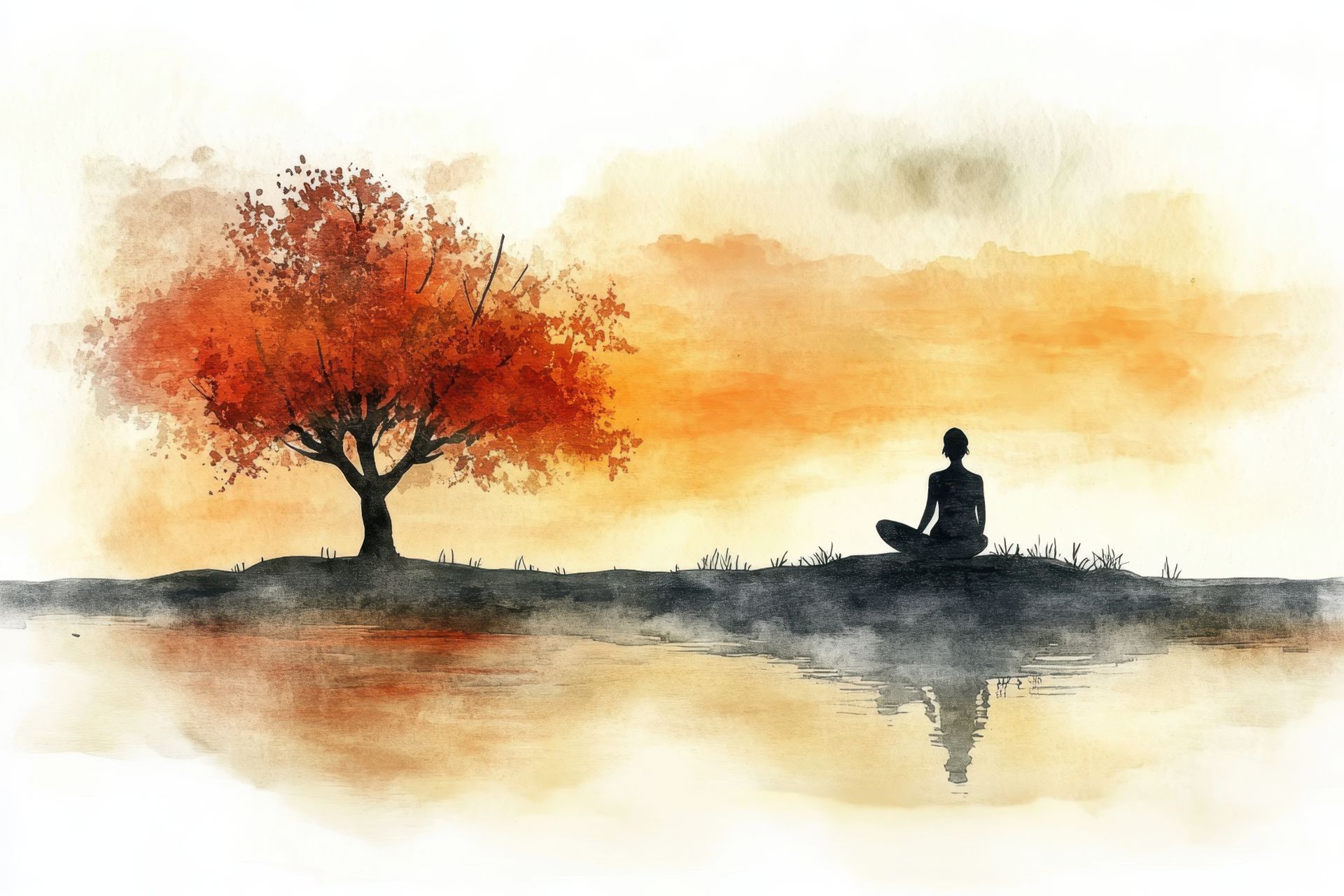
The task of modernity is to recognize that our existence rests upon the entirety of planetary life.
Paul Hawken, Carbon: The Book of Life
Reflections
This message, for which it seems I am a vessel, continues to grow louder each day. Its echo, so clear; its truth, undeniable.
Our greed, lust, and gluttony are propelling us toward an unnerving future — one that almost certainly ends in the tragic loss of humankind.
This reality is no longer myth. Deep down, we know it. Yet, somehow, we continue to turn a blind eye.
The modern world is hostile to the human spirit. It begs for our attention, subverts our will, and lures us down a path of unchecked consumption and desire.
We must find a way to make peace with the world around us, to live in harmony with each other — man, woman, and nature.
In Carbon, Hawken reminds us of our true place within this larger whole:
“Within and around us is a living, breathing sphere of consciousness woven by a billion years of evolving life […] We are an uncommonly new species on the planet with a rather unusual brain, prone to extraordinary errors of judgment, still getting our feet wet when measured against geological time. Nature, on the other hand, never makes a mistake. It experiments, one of which is us.”
Like all life on Earth, we exist as a body of atoms, alive with particles buzzing with energy. That energy, our life force.
By a twist of evolutionary fate, we have been gifted immense power, only to turn it against ourselves. For our species to survive, we must learn to wield this power for good — a reckoning we can no longer avoid.
Facing that reckoning begins with remembering what we have forgotten about our shared existence. In How to Hear the Song of Life, Maria Popova captures this awakening beautifully:
“We are only just beginning to unlearn everything we have been taught by the erasure of our creaturely belonging that we call civilization in order to remember what we were born knowing: Life and its right are not something we can claim for ourselves unless we accord them to everything else that exists, bound to us by the mesh of mutuality that makes this drifting rock a living world.”
In a world filled with noise, perhaps silence is the cure to all that ails us. For it is only when we get quiet that the song of life permeates our being and a sort of resonance takes hold. A sense of harmony rises to the surface, and with it a dissolution of self.
In that quiet resonance, we return to what Popova calls:
“[…] a kind of homecoming to an elemental reality our sciences are only just beginning to confirm: that we think not with the brain but with the world, that place and personhood are indelibly entwined, that life is a song singing us back to ourselves so that when we die we may be sung across the threshold into the rhizomatic everythingness of everything.”
The resounding song of life reverberates through me, its message echoing what Hawken writes in Carbon:
“A broken planet lies before us, but there is also a buzzing, thrumming, thriving sphere imbued with imagination, mystery, and courage.”
The euphony of nature is a breath of fresh air, a source of inspiration. As it flows through me, its energy brings life to every atom of my being. It moves me to put beauty into words — awakening the creator within to a truth E.E. Cummings described so well:
“The Artist is no other than he who unlearns what he has learned, in order to know himself.”
“May we be visited so thoroughly and met in wild places so overwhelmingly that we are left undone.”


0 Comments